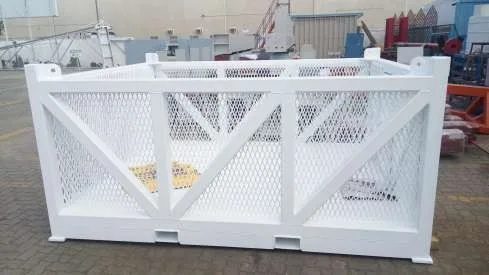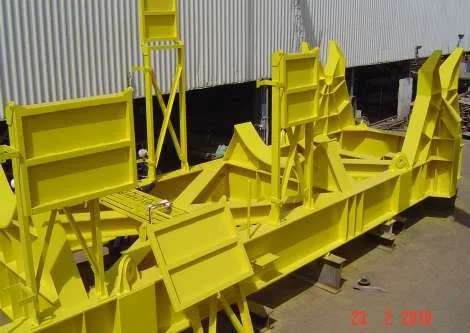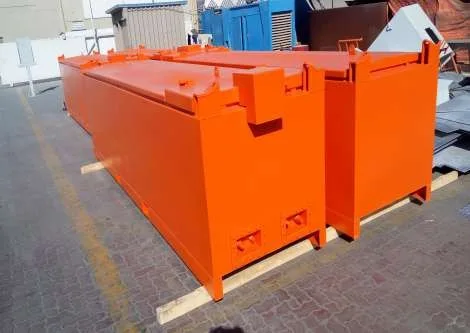
Bunded fuel tanks are one of the workhorses of our yard. We have built them in 500, 1,000, 2,500 and 5,000 gallon capacities for power rental fleets, ports and oilfield operators — from a pair of offshore units right up to a single order of sixty 5,000-gallon containerised tanks.
On the outside they can look fairly simple, just a box holding diesel. Spend a few years watching rental fleets beat them up on remote sites, though, and you quickly learn which details matter.
Open bund, enclosed container or double-wall?
Every bunded tank exists for the same reason: if the inner tank ever leaks, the outer containment catches at least 110% of the fuel so nothing hits the ground. How you package that containment depends on how the tank will be moved and refuelled.
- Double-wall tanks keep a compact footprint and are popular at 500 and 1,000 gallons alongside temporary generators.
- Containerised bunded tanks sit inside an ISO-style frame with corner castings and forklift pockets, making them easy to stack, truck and crane around rental depots.
- Lockable pump cabinets built into one end protect hoses, meters and valves from sand, sun and tampering.
Decide early if the tank will ever go offshore
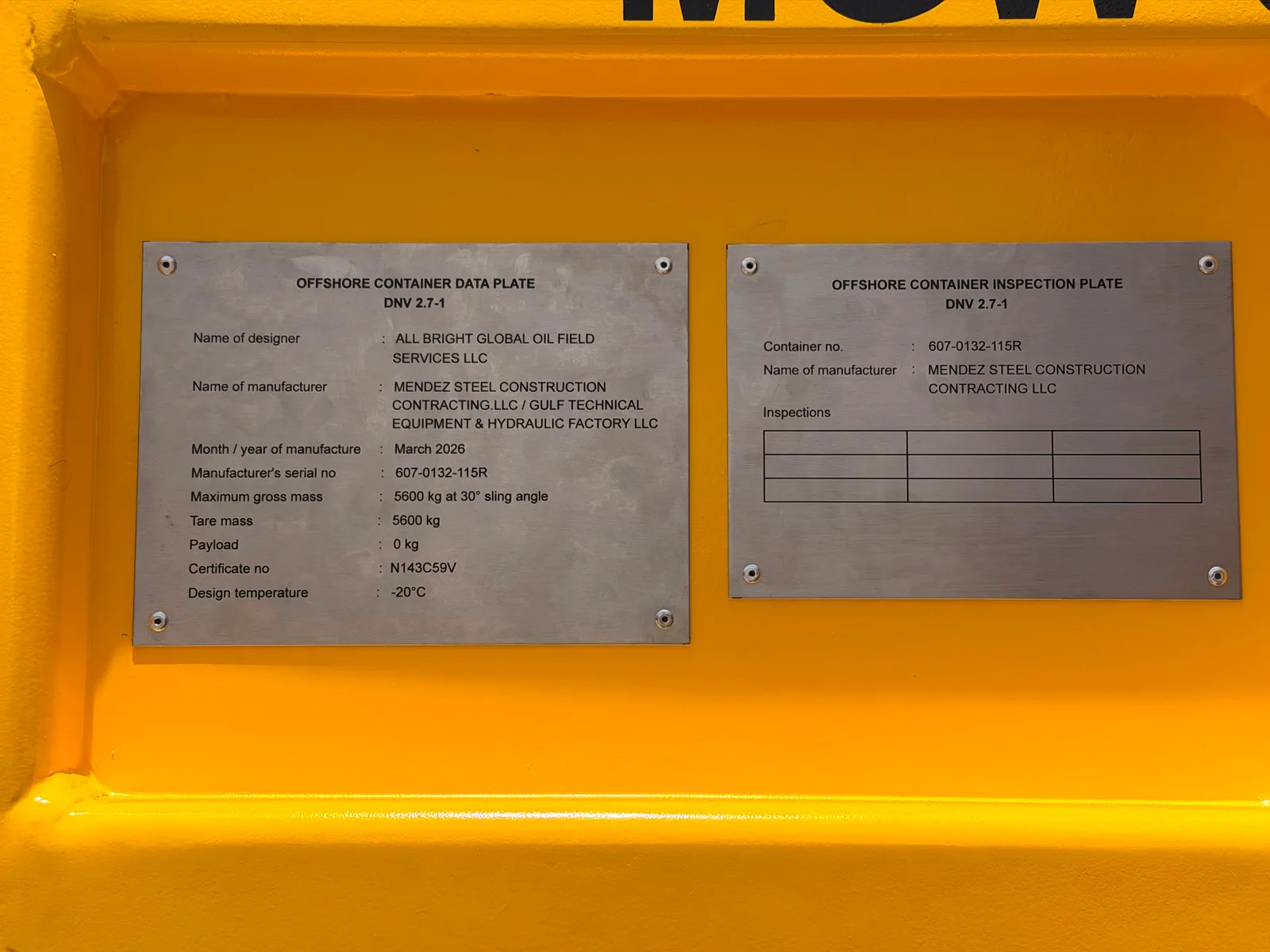
A standard onshore containerised fuel tank and a DNV 2.7-1 certified offshore tank may hold the same 2,500 or 5,000 gallons, yet they are built to very different rules. Offshore units need approved design drawings, traceable impact-tested steel, full weld NDT, certified lifting pad eyes and witnessed drop or load tests.
You cannot easily "upgrade" an onshore tank to DNV 2.7-1 after it is welded up. If there is even a small chance a fleet tank will end up on a barge or platform, it is much cheaper to build it to offshore spec from the beginning.
Pressure testing, baffling and repeat runs
Internal baffle plates stop fuel surging violently when a partially filled tank is moved, while manways give maintenance crews a way to clean sludge out years later. Before any paint goes on, we pressure-test both the primary tank and the secondary bund so leaks are caught on bare steel.
When a client orders twenty-five or sixty identical tanks, we build dedicated jigs and run fabrication, testing, blasting and painting in a steady flow. Every unit comes out matching the last one, with spare parts, gaskets and hose connections interchangeable across the whole fleet.