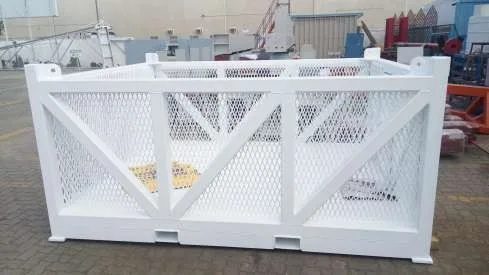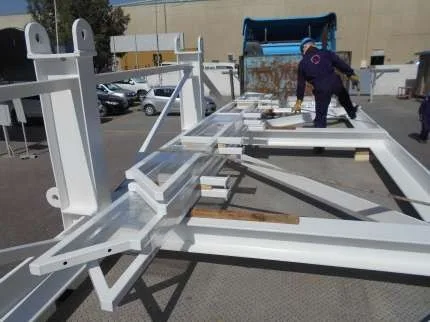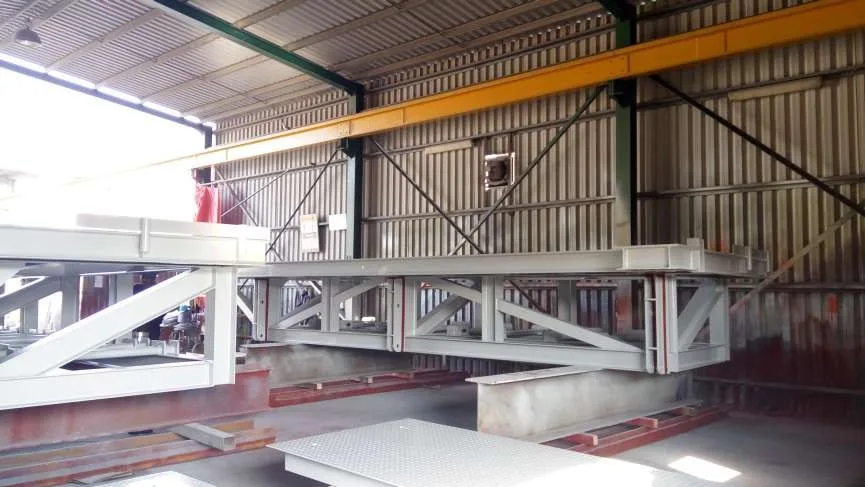
If a piece of equipment is going to be craned back and forth between supply boats and offshore platforms, it usually falls under DNV 2.7-1. Cargo baskets, tool boxes, offshore tank frames and specialist equipment skids all wear the same small stainless data plate once they pass certification.
People glance at that plate all the time on deck, yet half the lines only make sense once someone walks you through them. Below is how it breaks down on a real hydraulic hose reel drum frame we fabricated in March 2026.
Designer and manufacturer are listed separately
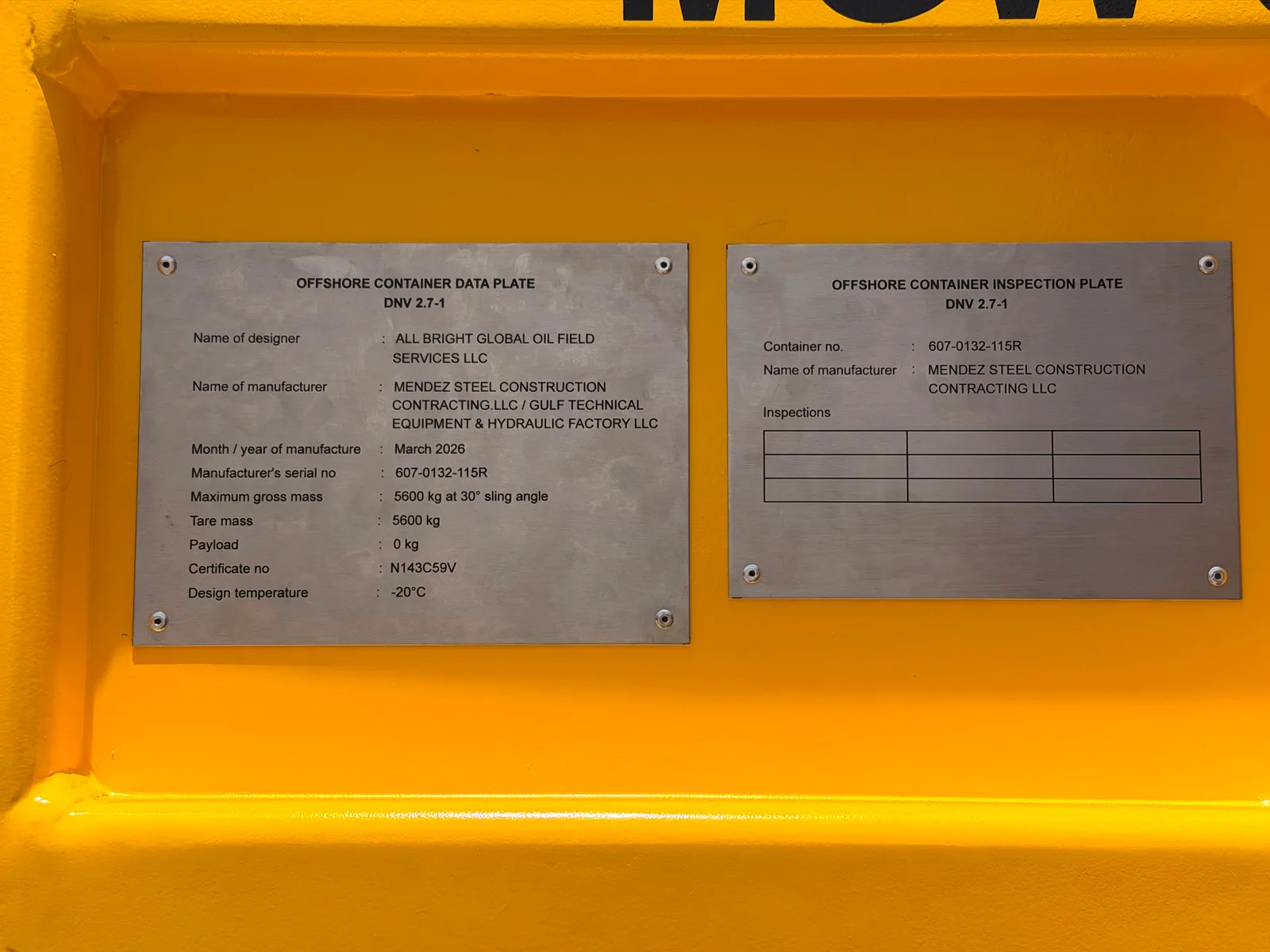
Look near the top of the plate and you will see two different lines: one for the designer and one for the manufacturer. On our hose reel frame, All Bright Global Oil Field Services LLC is listed as the designer, while the manufacturer line credits Mendez Steel Construction Contracting LLC together with Gulf Technical Equipment & Hydraulic Factory LLC.
That distinction is there for a practical reason. Years down the line, if an engineer wants to check the structural calculations, they go back to the designer. If anyone asks about weld records, steel heat numbers or coating history, they come to the shop that built it.
Serial number and DNV certificate number
The manufacturer’s serial number — 607-0132-115R on this frame — is also stencilled in big letters on the steel so riggers can spot it from across a yard or deck. Right alongside it on the plate sits the certificate number, N143C59V, which ties the physical frame back to its signed certification pack.
Maximum gross mass, tare and payload
- Maximum gross mass (MGM) is the absolute heaviest the unit can be when it leaves the ground, contents included. On this unit it is 5,600 kg.
- Tare mass is what the unit itself weighs empty. Here that is also 5,600 kg.
- Payload is what you are allowed to load inside. Here it reads 0 kg.
Seeing a zero payload sometimes surprises people the first time they spot it, though it makes complete sense on an equipment frame. The hydraulic reel and its fittings live inside the frame permanently, so they are already counted in the tare weight. Nobody is supposed to toss extra gear on top. A cargo basket of the same footprint would have a much lighter tare and a proper working payload.
Sling angle and design temperature
The weight rating on this plate is certified at a 30° sling angle to the vertical. Hook up a wider sling angle and the side loads on the pad eyes climb fast — you are immediately outside what the frame was tested and approved for.
The −20 °C design temperature throws people off too when the unit is working in the Gulf. It has nothing to do with the weather forecast in Dubai or Abu Dhabi. It tells you the grade of steel and weld impact toughness the unit was built to meet.
The inspection plate bolted right next to it
Beside the main data plate you will see a second plate with a blank grid waiting for date stamps. Every periodic inspection gets stamped into those boxes. If the last stamp is overdue, a good crane operator or deck foreman will refuse to lift the unit — no matter how tidy the paint looks.