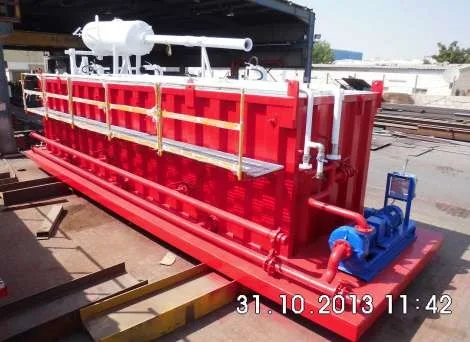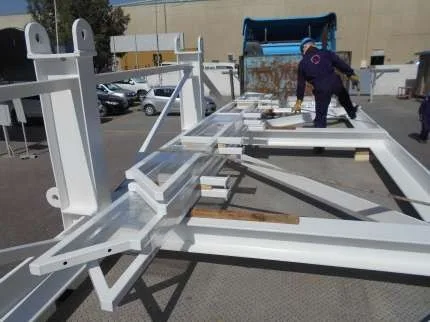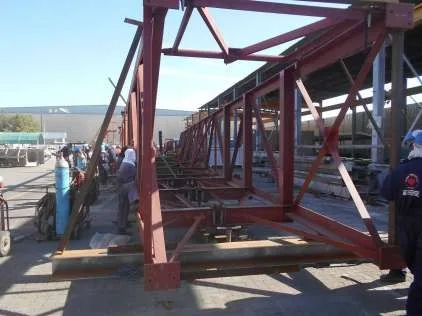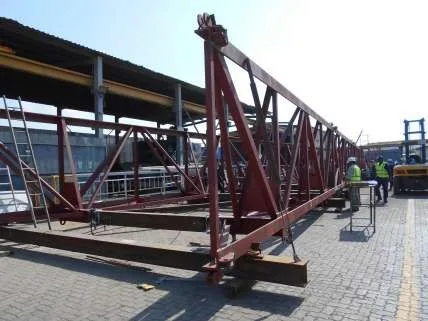
Heavy drilling equipment is where you really see what a fabrication shop is made of. Over the years we have built 160 and 250 workover rigs, a 160-kip 4F servicing rig mast assembly for DRI, mast and substructure components for MHWirth, a 1,100-kip 4F PSL-1 substructure, and BOP and tension-table substructures for Halliburton.
Jobs at that load rating do not forgive shortcuts. Everything from how the steel arrives at the gate to how the last pin hole is lined up follows a tight discipline.
Material traceability before the first cut
Before a beam or plate for a mast leg or substructure girder hits the saw, its heat number is matched against the mill test certificate and transferred onto every cut piece. On API 4F PSL-1 work built for client API certification, an untraceable offcut cannot go into a primary load path — even if you are 99% sure what grade it is.
Holding straightness and pin-hole alignment
Masts telescope, fold or pin together in sections, and substructures have to land square on rig mats with rotary beams, BOP frames and tension tables lining up to the millimetre. Welding heavy box sections throws a lot of heat into steel, and if you weld one side out of sequence, the whole assembly bows like a banana.
Our foremen and welders work to balanced welding sequences, check twist and camber after each major pass, and verify critical pin-to-pin centres with calibrated tapes and straightedges while the steel is still in the jig.
Welding procedures, NDT and working with client inspectors
Every critical joint is welded by qualified welders following approved WPS/PQR documents, followed by visual inspection and the specified NDT — usually magnetic particle and ultrasonic testing on primary welds. Because we treat the client’s inspector as part of the build rather than a hurdle at the end, hold points get signed off smoothly without stalling the bay.