When people visit a fabrication workshop, their eyes usually go straight to the welders and the finished frames. Yet most of the time won — or lost — on a steel job happens much earlier, during cutting, drilling, rolling and machining.
In our yard we run two CNC band saws with automatic line cutting and drilling, a 2 × 6 metre CNC plasma and oxy-fuel table, four lathes, two milling machines, rolling, bending and shearing machines, and four overhead cranes up to 8 tonnes. Keeping those under one roof changes how smoothly a project runs.
Bolt holes that line up on the first try
Anyone who has erected structural steel knows the misery of fighting misaligned bolt holes ten metres up in the air. Cutting beams to length and drilling connection holes on an automated CNC line takes human marking errors out of the equation. Gussets, end plates and cleats cut on the CNC plasma table match the drilled beams straight off the nest.
That pays off twice: fitters spend less time tweaking joints on the shop floor, and erection crews on site drop bolts straight through without reaching for a reamer.
No waiting on outside machine shops for pins, bushes and bosses
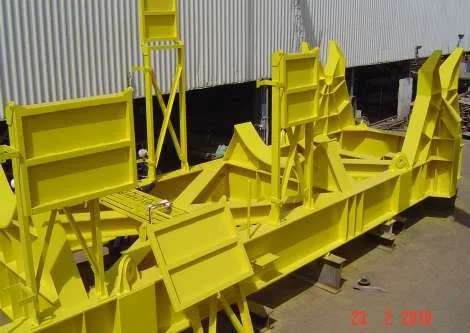
Oilfield skids, lifting frames, hose reel assemblies and rig structures nearly always need machined parts — bored pad eyes, shaft housings, spacer bushes, threaded bosses or machined bearing pads. Sending small batches of parts out to a third-party machine shop means waiting in someone else’s queue and chasing deliveries.
Having our own lathes, mills, radial and magnetic drills, and threading machines means machined components are ready the exact day the fabricators need them for tack-up.
Moving heavy steel without bottlenecks
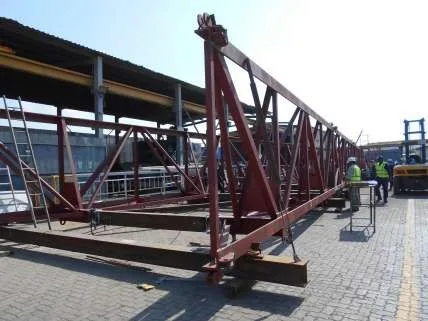
With 55 arc, MIG and TIG welding machines running alongside four overhead cranes (one 8-tonne and three 5-tonne) and two 6-tonne forklifts, heavy sub-assemblies move cleanly from cutting to fit-up, welding, blasting and load-out. Less waiting for a lift means fewer delays across the whole schedule.